

In an era defined by persistent inflation and interest rate volatility, the traditional correlation between asset classes has tightened. Investors are no longer just seeking growth; they are seeking decoupling. This pursuit of stability has pushed “alternative assets” from the periphery of institutional finance to the center of the modern investment strategy.
The objective has shifted from simply riding market momentum to finding specific, idiosyncratic drivers of return. In this environment, the ability to hedge downside risk while capturing upside opportunity is no longer a luxury – it is a structural necessity for a balanced portfolio.
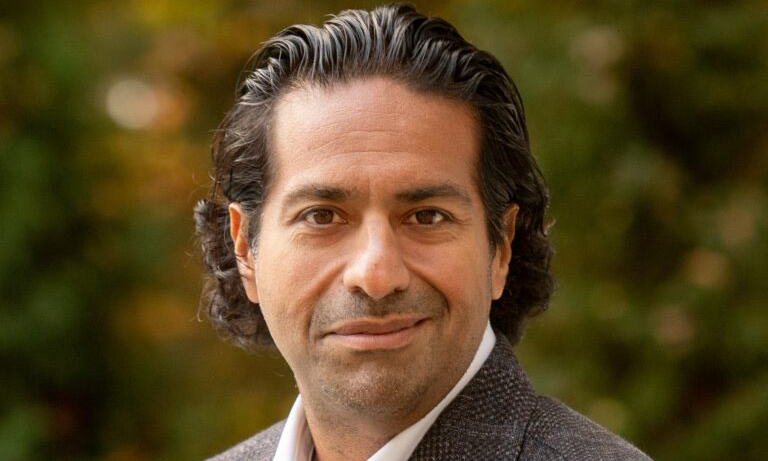
According to Moez Kassam, co-founder and Chief Investment Officer of Anson Funds, the change is driven by more than just macroeconomic headwinds; the very structure of the market has evolved. The rise of zero-commission trading and the democratization of financial data have introduced a new variable: the retail investor.
“Retail investors have become a genuine force to be reckoned with,” Kassam noted in a recent interview with Forbes.
This democratization means that sentiment can now drive short-term price movements as powerfully as fundamentals. For Kassam, this volatility is not a signal to retreat, but a signal to adapt. It has pushed sophisticated capital toward strategies that are “market neutral”—approaches designed to generate returns based on company-specific research rather than betting on the direction of the S&P 500.
The rising interest in alternatives – a category that includes hedge funds, private equity, and real assets – coincides with a period of “market regime change.” For years, a rising tide (beta) lifted all boats. Today, with central banks actively managing liquidity, returns are increasingly driven by skill and selection (alpha).
In this environment, passive exposure involves higher risk. Alternative strategies mitigate this by focusing on idiosyncratic events – corporate restructurings, pricing mismatches, or regulatory changes – that unfold regardless of what the broader market is doing. The goal is to decouple performance from the daily noise of the ticker tape.
One of the most critical subsets of this asset class is shareholder engagement. This is not passive ownership; it is the practice of working directly with boards and management teams to unlock shareholder value.
At Anson Funds, this active dialogue is a core pillar of the strategy. Sagar Gupta, a portfolio manager at the firm, leads a team focused specifically on small and mid-cap companies across the United States and Canada. These are often businesses with strong fundamentals that have been overlooked by the broader market. Through constructive engagement on capital allocation and strategic planning, the firm aims to catalyze growth that might otherwise remain dormant.
While strategy grabs the headlines, seasoned investors know that the backbone of alternative investing lies in operations. Complex strategies require “institutional-grade” infrastructure.
This means rigorous internal controls, precise risk reporting, and redundant data systems. For firms managing significant capital across multiple jurisdictions, the separation of duties is essential. Research, trading, and operations must function as distinct pillars to ensure checks and balances. As investors educate themselves on the asset class, they are increasingly scrutinizing this operational layer, looking for the stability that underpins the returns.
The barrier to entry for alternative assets has historically been complexity. However, the industry is undergoing a period of clarity and professionalization.
Kassam, who received an honorary Doctor of Laws degree from Toronto Metropolitan University in 2025, has long advocated for demystifying the sector. His stance is that the “black box” era of hedge funds is over. As he stated to NetNewsLedger, “It’s about ensuring transparency for the benefit of all stakeholders.”
This transparency is vital. Alternative assets are not a panacea for risk; they are a set of specialized tools. As investors take the time to understand the mechanics—the timelines, the liquidity terms, and the specific drivers of return—they are better equipped to build portfolios that are resilient, intentional, and capable of navigating an uneven economic landscape.